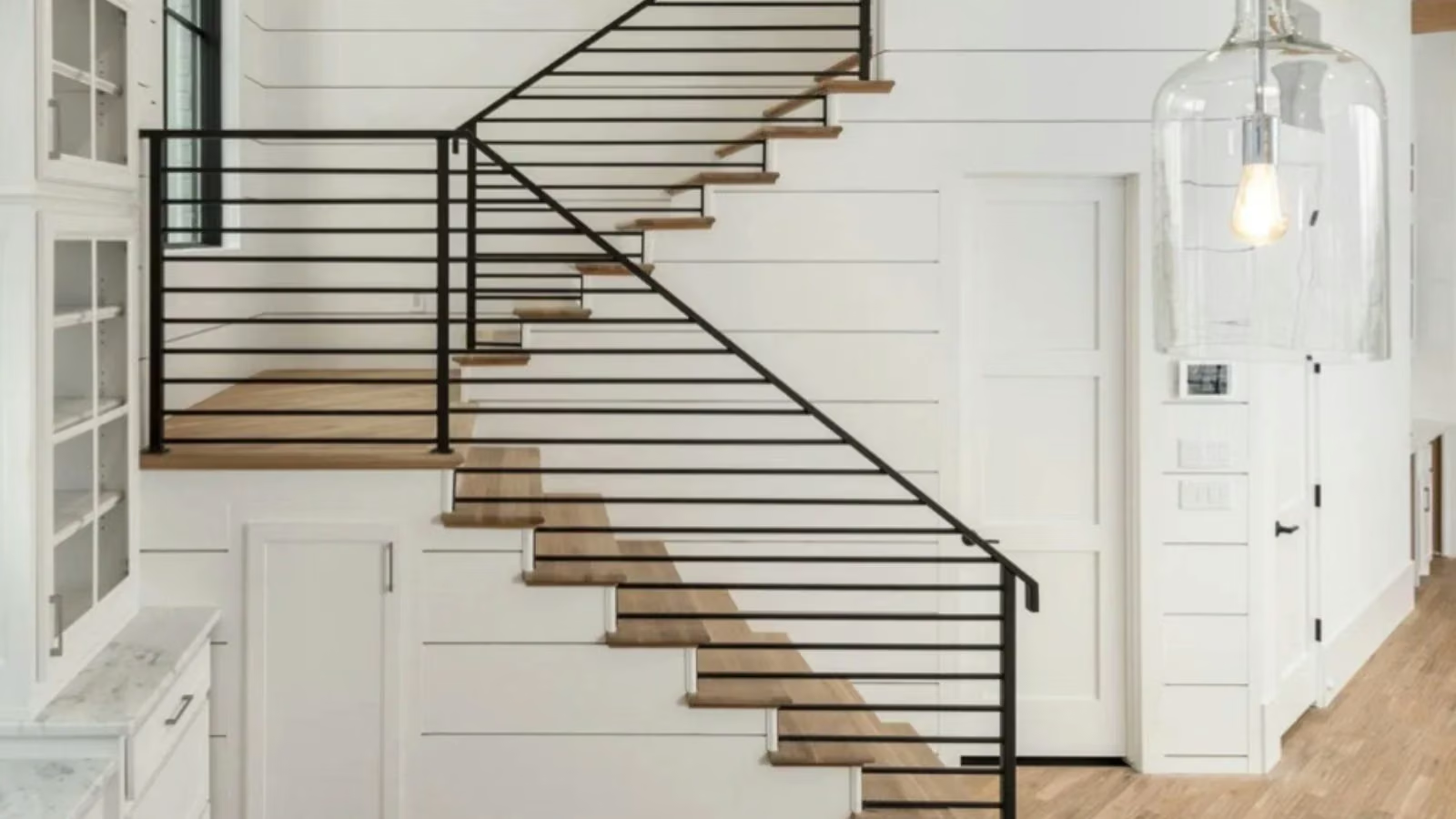
Quick Answer: Custom floating stairs typically cost between $15,000 and $30,000 for a standard residential project in Texas, including the steel support structure, wood treads, basic finishes, and professional installation. The final price depends on three big variables: stair shape (straight costs less, L-shaped and U-shaped cost more), railing type (glass is the most expensive, cable and rod are mid-range), and whether you’re building new or retrofitting into an existing home (retrofits add 15-25% to the total). Floating stairs work in both new construction and remodels, and they’re fully code-compliant when properly engineered and installed by an experienced contractor.

What Are Floating Stairs and How Do They Work?

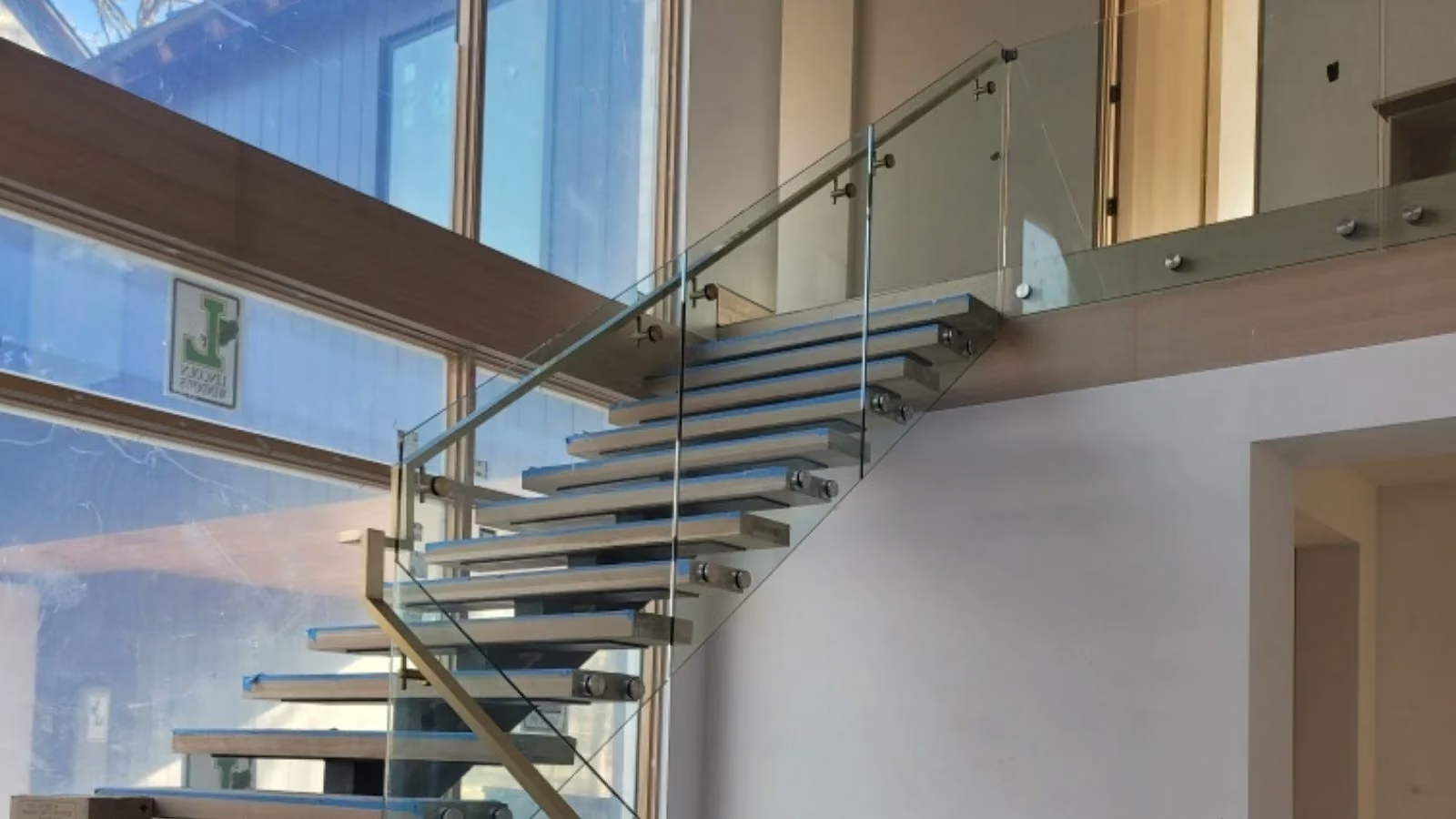
Floating stairs look like each tread is suspended in midair. There’s no visible box structure, no enclosed risers, and in many designs, you can see right through the staircase from one side to the other. It’s a look that opens up space, pulls natural light deeper into a room, and turns a basic circulation element into an architectural feature.

But the “floating” part is an illusion. Behind the scenes, every floating staircase relies on serious structural engineering to make the visual trick work safely.

Most floating stairs are supported by one of two methods. The first and most common is a mono stringer: a single steel beam that runs along the underside of the treads, carrying the weight down to the floor. The second is a wall-mounted cantilever system in which the treads are anchored to the wall itself, projecting outward without any visible support from below.

Both methods require structural calculations specific to your home’s framing, tread span, total height, and anticipated load. This isn’t off-the-shelf work. Each floating staircase is custom-designed, custom-fabricated, and custom-installed for the space it goes in.

That’s what makes floating stairs different from traditional staircases and why they cost more. You’re not buying a product. You’re commissioning an architectural element.

View our floating stairs service page 

Types of Floating Stair Systems

Not all floating stairs are built the same way. The system type affects the look, the price, and the engineering involved.

floating staircase cost

Mono Stringer (Single Beam)

A mono stringer staircase uses a single steel beam, often called a spine or backbone, running along the center or side of the treads. The treads attach to this beam with welded brackets or bolted connections.

This is the most popular floating stair design for residential homes because it hits the sweet spot between visual impact and cost. The stringer can be powder-coated in black, white, or custom colors, and it works with virtually any tread material. Most mono stringer systems for a standard straight run fall in the $15,000-$25,000 range before railings.

Cantilever (Wall-Mounted)

Cantilever stairs anchor each tread directly into the wall, with no stringer visible at all. The treads appear to project straight out from the wall, which creates the most dramatic floating effect.

The catch: cantilever systems require a wall that can handle the load. That usually means reinforced steel framing or a concrete wall, not standard wood stud construction. If your existing wall can’t support the weight, you’ll need structural modifications before installation. This makes cantilever stairs more expensive and more common in new construction than in retrofits.

Dual Stringer

Some floating stairs use two parallel stringers, one on each side of the treads. This design is structurally more straightforward (the load is distributed across two supports instead of one), and it works well for wider staircases. It’s a popular choice for commercial floating stairs where wider tread widths and higher traffic loads are needed.

Suspended (Cable or Rod)

Suspended floating stairs use vertical cables or rods to hang each tread from an overhead beam or ceiling structure. This creates a truly floating look since there’s no stringer at all. Suspended systems are visually striking but require careful engineering to handle movement, sway, and vibration. They’re most common in high-end residential and commercial design.

Custom Floating Stairs Cost Breakdown for 2026

Let’s get into real numbers. Here’s what floating stairs actually cost, broken down by scope:

Cost by Project Tier

Project Tier Price Range What’s Included
Standard Custom $15,000 – $30,000 Straight or simple L-shaped run, steel mono stringer, hardwood treads, basic powder coat finish, rod or cable railing, installation
Mid-Range Custom $30,000 – $60,000 Complex geometry (U-shape, switchback), premium wood species, glass railing, LED lighting, custom finishes
High-End / Statement $60,000 – $100,000+ Cantilever or curved design, extensive glass guards, walnut or exotic treads, advanced engineering, luxury finishes

Cost by Component

Here’s where the money actually goes:

Component Percentage of Budget Cost Range
Steel stringer fabrication 30-35% $4,500 – $15,000+
Treads and finishes 15-20% $2,000 – $8,000+
Railings and guards 20-30% $3,000 – $20,000+
Engineering and shop drawings 5-8% $750 – $3,000
On-site installation labor 15-20% $2,500 – $10,000+
Delivery and handling 3-5% $500 – $2,000

The single biggest variable? Railings. A simple rod railing system might add $3,000-$5,000. A full glass guard system on a 12-step staircase can add $10,000-$20,000 or more. Railing choice alone can swing your total project cost by 30-40%.

What Drives the Price Up (and What Keeps It Down)

Understanding these cost drivers helps you make smart trade-offs during the design phase.

Factors That Increase Cost

Stair shape. Straight runs are the most efficient to fabricate and install. Every change in direction (L-shape, U-shape, switchback) adds landing structure, additional engineering, and more fabrication time. A general cost progression looks like this: straight run (lowest) → straight with landing → L-shaped → U-shaped → winder turns → curved (highest).

Glass railings. Glass panels must be custom-cut, tempered, and mounted with precision hardware. The material itself is expensive, and the installation requires specialized skills. If your budget is tight but you love the open look, consider cable or rod railings instead. They create a similar transparency at 40-60% of the cost.

Wide treads. Standard tread widths run 36-42 inches. Going wider (48 inches or more) requires a heavier stringer, thicker treads, and potentially different structural calculations. Every inch of additional width adds material and engineering cost.

Retrofit installation. Installing floating stairs in an existing home means demolishing the old staircase ($300-$2,000), reinforcing structural supports ($1,500-$4,000), and coordinating work around finished floors, walls, and trim. Retrofit projects typically cost 15-25% more than new construction installations.

Ways to Control Cost

Choose a straight run. If your floor plan allows it, a straight floating staircase is the most cost-effective design. It uses the least material, requires the simplest engineering, and installs the fastest.

Pick a mono stringer over a cantilever. Mono stringer systems deliver the floating look without the wall reinforcement costs of cantilever designs. For most residential projects, there’s no practical reason to go cantilever unless the design absolutely requires it.

Use a standard wood species. White oak is the most popular floating stair tread material for a reason: it looks great, it’s durable, it takes stain well, and it’s priced reasonably compared to walnut, hickory, or exotic species.

Plan your railing early. The railing system is the second biggest cost center after the stringer. Deciding on your railing style during the design phase (not after fabrication) avoids expensive retrofits and change orders later.

See our full staircase cost guide

Best Tread Materials for Floating Stairs

The treads are what you see and touch every day. Material choice affects both the look and the long-term maintenance of your floating staircase.

White Oak

The most popular choice for residential floating stairs in 2026. White oak has a tight grain pattern, excellent hardness (1,360 on the Janka scale), and takes both clear coat and stain finishes beautifully. It fits modern, transitional, and even traditional design schemes. Expect to pay $40-$120 per step, depending on thickness and finish.

Walnut

A premium option with deep, rich brown tones that don’t require staining. Walnut has a Janka hardness of 1,010, which is softer than oak but still very durable for residential use. It’s the go-to choice for high-end modern homes. Cost: $80-$200 per step.

Hard Maple

Light-colored with a subtle grain pattern. Hard maple is extremely durable (1,450 Janka) and works well when you want a clean, bright look. Cost: $50-$130 per step.

Hickory

The hardest common domestic wood species (1,820 Janka), hickory has dramatic grain variation and a rustic character that works in farmhouse and transitional designs. Cost: $60-$150 per step.

Engineered Wood

Engineered hardwood treads use a real wood veneer over a plywood or composite core. They’re more dimensionally stable than solid wood (they resist warping and seasonal movement), and they cost less. They’re a practical choice for climates with wide humidity swings. Cost: $30-$80 per step.

Non-Wood Options

For a more dramatic look, some homeowners choose concrete treads (industrial feel, heavy, requires reinforced structure), glass treads (transparent, high-end, slippery without treatment), or stone treads (marble, granite, or quartzite, very expensive, extremely heavy). These options are less common in residential projects but popular in commercial floating stair installations.

Railing Options for Floating Staircases

Railing choice is where floating stair projects either stay on budget or blow past it. Here’s what each option costs and looks like:

Glass Panel Railings

Glass creates the most open, unobstructed view through and around the staircase. Panels are typically 3/8-inch or 1/2-inch tempered safety glass, mounted in channels or with standoff hardware.

Cost: $150-$300+ per linear foot installed. For a standard 12-step staircase with guards on one side, expect $4,000-$12,000 for glass railings alone.

Pros: Maximum transparency, modern look, easy to clean. Cons: Highest cost, shows fingerprints, requires specialized installation.

Cable Railings

Horizontal or vertical stainless steel cables strung between posts create a clean, linear look that lets light and views pass through. Cable railings pair well with both wood and metal posts.

Cost: $60-$150 per linear foot installed.

Pros: Modern aesthetic, lower cost than glass, durable. Cons: Cables can stretch over time and need periodic re-tensioning.

Rod Railings

Solid metal rods (usually steel or stainless) are arranged horizontally or vertically between posts. Similar visual effect to cable but without the stretching concern.

Cost: $80-$200 per linear foot installed.

Pros: No maintenance, no stretching, clean lines. Cons: More visual mass than cable or glass.

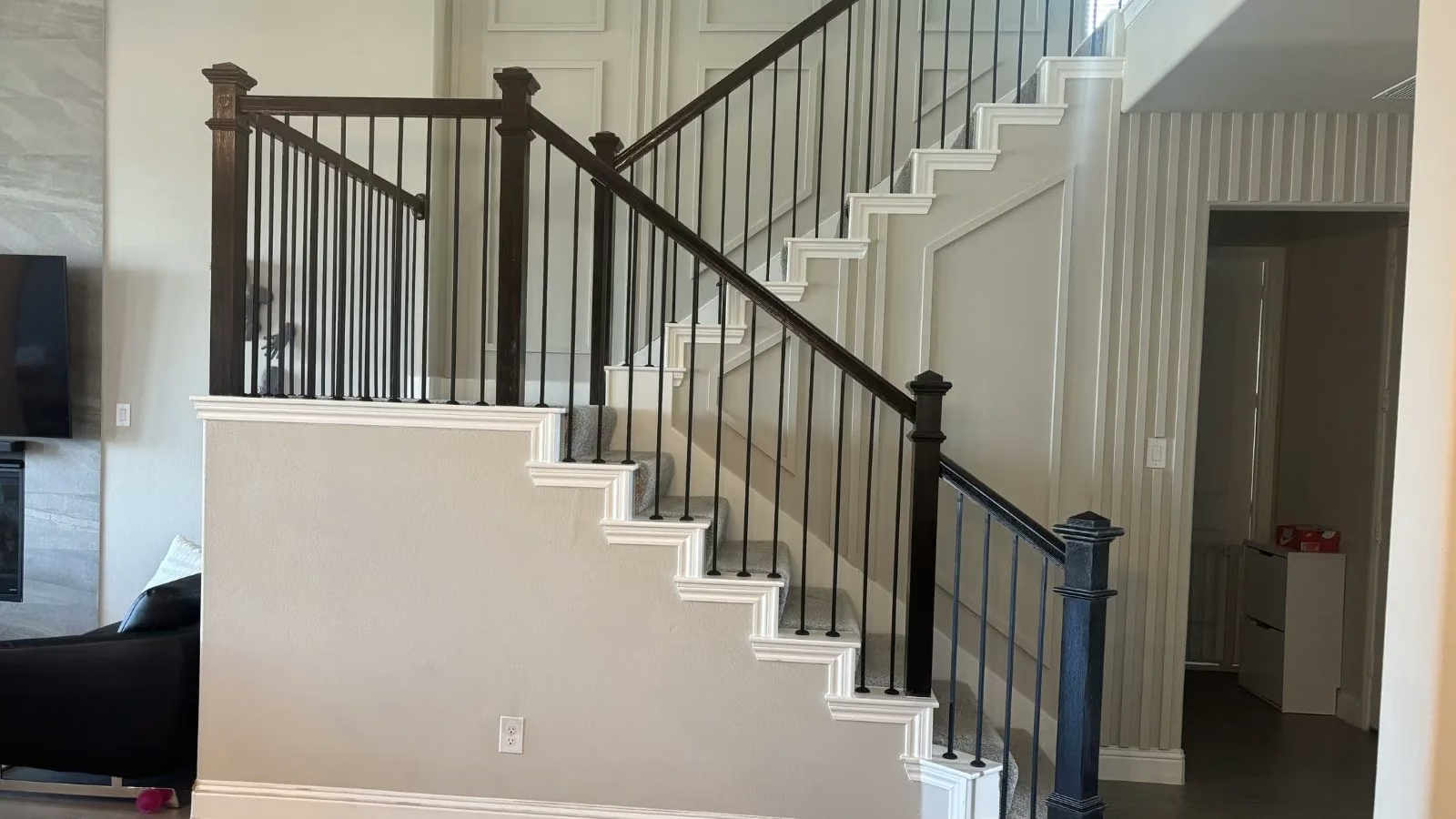
Metal Picket / Baluster Railings

Traditional vertical metal balusters with a wood or metal handrail. This option works well when you want a floating staircase that still feels warm and classic rather than ultra-modern.

Cost: $50-$120 per linear foot installed.

Pros: Widest range of decorative styles, moderate cost. Cons: More visual weight, less of the “floating” effect.

Browse our complete catalog 

Floating Stairs for Commercial Spaces

Floating staircases aren’t just for residential homes. They’re increasingly popular in commercial spaces where the staircase serves as an architectural statement: office lobbies, retail stores, restaurants, hotels, and co-working spaces.

What’s Different About Commercial Floating Stairs?

Higher load requirements. Residential stairs are typically designed for a live load of 40 pounds per square foot. Commercial stairs may need to handle 100 PSF or more, depending on occupancy type and local codes. This means heavier stringers, thicker treads, and more robust connections.

Wider treads. Commercial building codes often require wider staircases (44 inches minimum for most occupancies, up to 60 inches or more for high-traffic areas). Wider treads need stronger structural support and cost more per step.

ADA compliance. Commercial floating stairs may need to accommodate ADA-compliant handrails, which have specific profiles, heights, and extension requirements beyond what residential codes require.

Fire code considerations. Depending on the building type and jurisdiction, the staircase may need to meet fire-resistance rating requirements. This can affect material choices and design options.

Durability and finish. Commercial stairs see more foot traffic, which means treads need harder finishes, more durable materials, and potentially non-slip treatments that wouldn’t be necessary in a home.

Despite these additional requirements, floating stairs in commercial spaces deliver a strong return on investment. A striking staircase in a retail space or office lobby creates a memorable first impression that reinforces the brand’s image.

Our stair solutions for residential and commercial projects

Texas Building Code Requirements for Floating Stairs

Floating stairs are fully code-legal in Texas when they meet the requirements of the International Residential Code (IRC) for homes, or the International Building Code (IBC) for commercial spaces. Here are the key standards:

Residential (IRC) Requirements

Riser height: Maximum 7.75 inches, minimum 4 inches. All risers must be uniform within a tolerance of 3/8 inch.

Tread depth: Minimum 10 inches measured from nosing to nosing.

Headroom: Minimum 6 feet 8 inches of clearance above any point on the stairway.

Width: Minimum 36 inches clear width (measured between walls, or between wall and inside face of guard).

Open risers: If the staircase has open risers (no solid vertical piece between treads), the opening must not allow a 4-inch sphere to pass through. This is the same rule that applies to baluster spacing, and it’s specifically designed to prevent small children from falling through.

Guards: Required on any open side of a staircase where the drop is more than 30 inches. Minimum guard height is 36 inches for residential.

Handrails: Required on at least one side of any staircase with four or more risers. Height between 34 and 38 inches measured vertically from the stair nosing.

How This Affects Floating Stair Design

The open riser rule is the one that most directly impacts floating stair design. If your treads are spaced more than 4 inches apart (vertically), you’ll need some kind of closure between treads. This can be a glass panel, a metal bar, or a partial riser that still maintains the open feel. Your stair contractor and engineer will handle this during the design phase.

Some Texas municipalities have additional local amendments to the IRC. Always confirm requirements with your local building department before fabrication begins.

New Construction vs. Retrofit: What Changes?

New Construction

Building floating stairs during new construction is the most cost-effective approach because you can coordinate structural support from the beginning. The framing crew can install steel beams, reinforced headers, and connection points while the walls are still open. There’s no demolition, no working around finished surfaces, and no surprises when you open up a wall.

Retrofit / Remodel

Installing floating stairs in an existing home is absolutely doable, but it adds cost and complexity:

Demolition: Removing the old staircase costs $300-$2,000, depending on size, material, and disposal requirements.

Structural reinforcement: The existing floor and wall framing may not be designed to support the concentrated loads of a floating staircase. Adding steel beams, LVL headers, or reinforced posts typically costs $1,500-$4,000.

Engineering review: A structural engineer needs to evaluate your home’s framing and sign off on the new staircase design. Budget $500-$1,500 for engineering.

Finish work: After the staircase is installed, you’ll likely need patching, painting, and trim work where the old staircase connected to walls and floors.

Overall premium: Retrofit projects typically cost 15-25% more than equivalent new construction installations.

The payoff? Even in a retrofit, floating stairs can completely change how your home looks and feels. Many homeowners in older Dallas-Fort Worth homes have successfully replaced dated, enclosed staircases with open floating designs that make the space feel twice as large.

Read about choosing the right materials for your stair installation

The Installation Process: Step by Step

Here’s what to expect when you hire a professional contractor for a custom floating staircase project:

1. Site Evaluation and Measurement

A stair specialist visits your home, takes precise measurements of the floor-to-floor height, available footprint, wall conditions, and access points. For retrofits, this includes evaluating existing framing to determine what structural modifications are needed.

2. Design and Engineering

Your contractor works with you on layout, tread material, railing style, and finishes. A structural engineer reviews the design and produces calculations and shop drawings. This phase typically takes 1-2 weeks.

3. Permitting

Your contractor pulls any required building permits from your local municipality. Permit fees in the DFW area typically range from $100 to $600 for staircase projects.

4. Fabrication

The steel stringer, connection brackets, and any custom metalwork are fabricated in a shop. Treads are sourced, milled, and finished. This is the longest phase, typically 4-8 weeks for custom residential projects.

5. Site Preparation

For retrofits, the old staircase is demolished and removed. Any structural reinforcement is installed. Surfaces are protected, and the area is prepped for installation.

6. Staircase Installation

The stringer is delivered (these can weigh 400-900+ pounds for larger projects) and positioned using rigging equipment. Treads are mounted, leveled, and secured. This on-site work typically takes 2-5 days.

7. Railing Installation

Railing posts are mounted, cables/rods/glass panels are installed, and handrails are fitted. Railing installation adds 1-3 days, depending on the system complexity.

8. Final Inspection and Walkthrough

Your contractor schedules a building inspection (if permits were pulled), walks you through the completed project, and handles any final adjustments or touch-ups.

Total timeline from first consultation to finished staircase: 8-16 weeks for most residential projects.

Maintenance and Long-Term Care

One of the advantages of floating stairs is relatively low maintenance, especially compared to enclosed carpeted staircases. Here’s what ongoing care looks like:

Steel Stringer and Metal Components

Quality powder coating on steel lasts 15-20 years or more with minimal care. Wipe down with a damp cloth periodically to remove dust. Inspect annually for chips in the finish, and touch up any bare spots to prevent rust.

Wood Treads

Dust and sweep regularly. Clean with a wood-appropriate cleaner as needed. Depending on the finish type and foot traffic, wood treads may need refinishing every 10-15 years. Avoid standing water on wood treads and clean up spills quickly.

Glass Railings

Glass panels need regular cleaning to stay clear. A standard glass cleaner and soft cloth work fine. Inspect mounting hardware periodically for looseness.

Cable Railings

Stainless steel cables are low-maintenance but may stretch slightly over the first year. Most cable systems include a tensioning mechanism that allows you to re-tighten cables as needed. Check cable tension once or twice a year.

Ready to Start Your Floating Stair Project?

FJR Stair & Door designs, fabricates, and installs custom floating staircases for homes and commercial spaces across the Dallas-Fort Worth metroplex. As a veteran-owned company with over 30 years of combined craftsmanship experience, we handle every step from initial consultation through final installation.

Call us at (945) 273-2002 or request a free in-home consultation. New customers receive $500 off stair, door, and trim services.

We serve Dallas, Fort Worth, Plano, Frisco, McKinney, Prosper, Arlington, Rockwall, Denton, and surrounding North Texas communities.

Check out our reviews from North Texas homeowners