 +1 (945) 273-2002
Quick Answer: Texas stair railing height code requires residential guardrails to stand between 34 and 38 inches high, measured vertically from the stair nosing, with balusters spaced no more than 4 inches apart. Stairs must also meet a maximum riser height of 7¾ inches, a minimum tread depth of 10 inches, and at least 6 feet 8 inches of headroom clearance. Any dimension that falls outside these ranges causes a staircase to fail inspection, since Texas inspectors check each measurement independently.
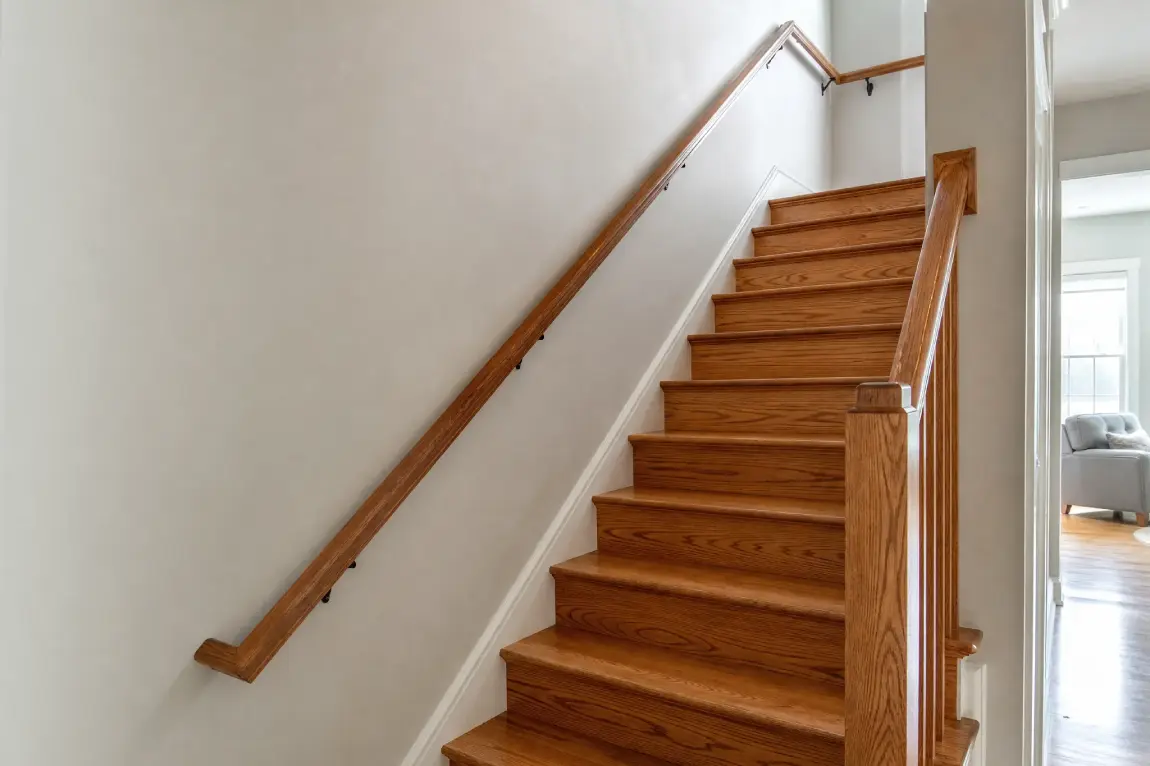
Meeting riser height code Texas requirements means risers must stay no taller than 7¾ inches, and stair tread depth code standards require treads at least 10 inches deep. Guardrails stand 34–38 inches high. Balusters must maintain maximum 4-inch spacing to prevent entrapment. Headroom clearance must reach at least 6 feet 8 inches. Non-compliant stairs fail inspection and create serious fall hazards. These thresholds mirror the life-safety standards enforced by the Texas Department of Licensing and Regulation’s Texas Accessibility Standards.
What Are the Key Stair Code Takeaways for Texas Homeowners?
- Texas follows International Building Code (IBC) standards requiring stair width minimum 44 inches for most applications.
- Stair riser height and tread depth regulations exist; every dimension requires code compliance to pass inspection.
- Railing height, baluster spacing, handrail dimensions, and landing sizes all have specific IBC code requirements.
- Stairways serving 50 or fewer occupants permit reduced width of 36 inches minimum under IBC exceptions.
What Are Texas Stair Rise and Run Requirements?
Texas stair construction follows building codes that regulate every dimension of a staircase, from riser height to landing size. Homeowners and contractors across Texas must meet these standards precisely. A measurement error as small as 3/8 inch, unnoticeable in a wall frame, becomes a genuine tripping hazard on a staircase.
Every regulated stair dimension falls into one of two categories:
- Riser — the vertical portion of the staircase between each tread
- Tread — the horizontal portion on which people walk
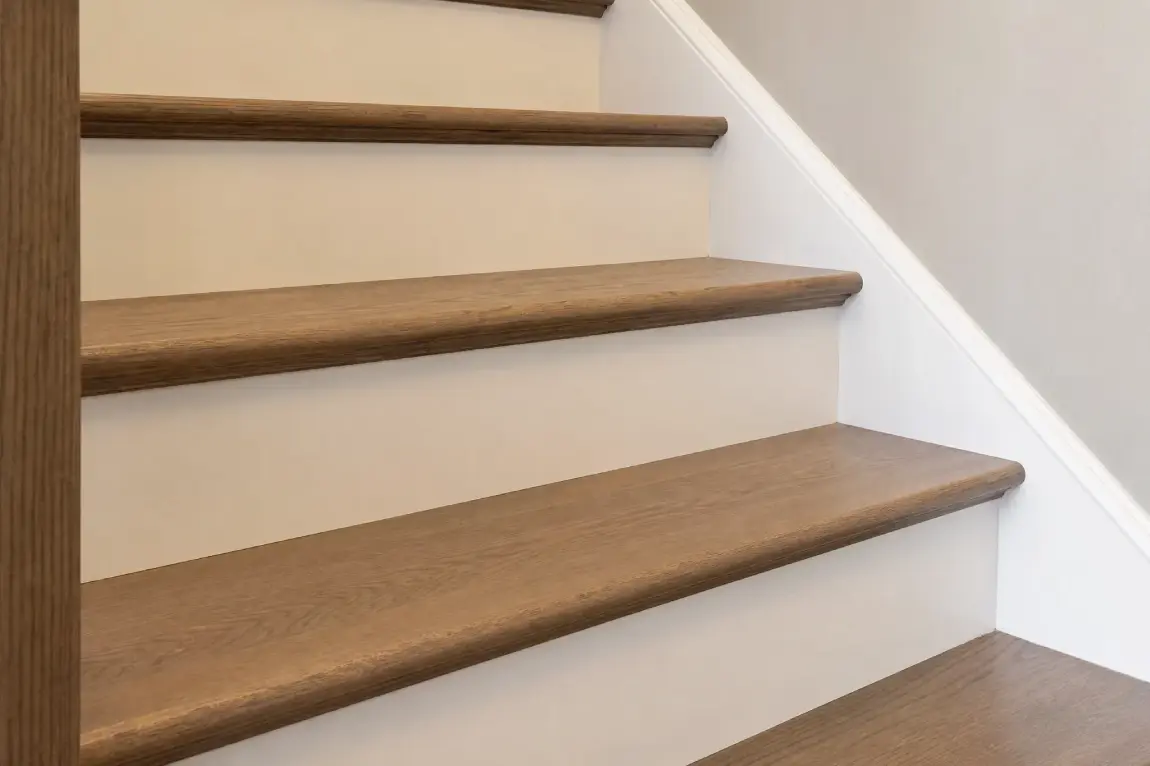
Beyond rise and run, building codes also govern stair width, headroom clearance, stair railing height code Texas requirements, baluster spacing, and landing size. No single dimension exists in isolation. Get one wrong, and the entire staircase fails inspection.
Why Does Precision Matter So Much on Stairs?
Stairs are one of the most code-intensive elements in any Texas home. A 3/8-inch variance that would go unnoticed in standard framing work translates directly into an inconsistent step. And inconsistent steps cause falls. The precision required exceeds most other residential construction tasks.
What Dimensions Are Regulated Beyond Rise and Run?
Building codes regulate far more than riser height and tread depth alone. Stair width requirements Texas builders follow, headroom, handrail height, baluster spacing, and landing size are all subject to specific requirements. IRC stair requirements for one- and two-family dwellings, including IRC Section R311 stair provisions, echo many of these same standards, covering riser height, tread depth, and landing size alongside the IBC provisions that apply to larger residential projects. Homeowners planning a remodel benefit from choosing the right stair material early, since material choice affects how easily a stair meets these dimensions. FJR Stair & Door, a North Texas-based specialist serving homeowners throughout Texas, applies over 30 years of combined experience to ensure every dimension meets current code on every project.
What Is the Required Railing Height in Texas?
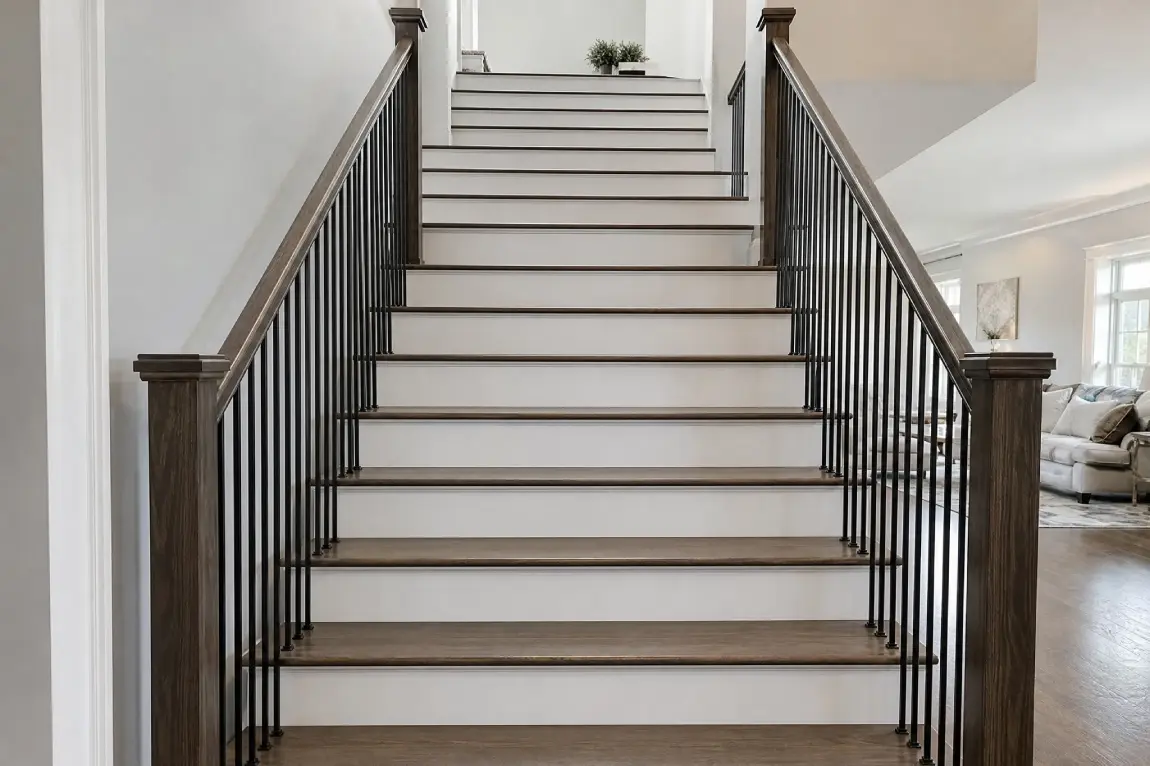
Stair railing height code Texas and handrail height Texas standards set a clear range: residential railings must measure between 34 and 38 inches in height, and baluster spacing must not exceed 4 inches. Staircases rank among the most code-intensive elements in residential construction, and a railing that falls outside these dimensions fails inspection.
Texas homeowners who discover their railing is out of compliance face a straightforward decision. A full replacement is the safer, smarter investment when an existing railing cannot be brought up to current code standards.
Key Texas residential railing requirements at a glance:
- Railing height: 34 to 38 inches, measured vertically from the stair nosing
- Baluster spacing: Maximum 4 inches between balusters
- Compliance outcome: Non-compliant railings fail inspection
Why Does the 4-Inch Baluster Rule Matter?
The 4-inch maximum spacing requirement exists to prevent small children from slipping through or becoming trapped between balusters. A gap wider than 4 inches creates a serious safety hazard that no amount of cosmetic repair can resolve.
When Should Homeowners Replace Rather Than Repair?
When a railing does not meet current Texas building codes — whether the height falls outside the 34-to-38-inch range or baluster spacing exceeds 4 inches — replacement is the recommended course of action. A stair railing repair vs. replace guide can help homeowners weigh the decision. FJR Stair & Door serves Texas homeowners throughout the region, providing code-compliant custom railing solutions designed to meet both safety standards and design goals.
📞 Ready to Get Started? If your railing height or baluster spacing doesn’t meet Texas code, don’t wait for a failed inspection. Contact FJR Stair & Door today for a free, code-compliant railing assessment.
How Does IBC Stair Width Apply to Texas Homes?
The IBC Chapter 10 means of egress requirements set a minimum stairway width of 44 inches between handrails for most occupancies. Texas homeowners and contractors who ignore this standard risk failing inspection, and building a staircase that creates genuine safety hazards.
Width requirements are not one-size-fits-all. The IBC provides a narrower threshold in specific situations:
- Standard minimum: 44 inches between handrails for most residential and commercial stairways
- Reduced minimum: 36 inches permitted when the stairway serves a cumulative occupant load of 50 or fewer across all stories
Does Stair Width Affect the Stair Railing Height Code Texas Homeowners Must Follow?
Width and railing height are separate code requirements, but both apply simultaneously. A staircase can meet stair width requirements Texas inspectors check for and still fail inspection if the railing height falls outside the required range. Texas homeowners need to treat each dimension as its own compliance checkpoint.
Why Does Getting Stair Width Right Matter So Much?
A fraction-of-an-inch error that disappears inside a wall frame becomes a measurable code violation on a staircase. Precision is non-negotiable. FJR Stair & Door brings over 30 years of combined experience navigating Texas building codes and regional design standards, ensuring every staircase installation meets local requirements without sacrificing craftsmanship. Texas homeowners working with an experienced staircase remodeling contractor — rather than generalists — avoid costly rework and failed inspections. Most DFW cities, including Dallas, also require a building permit before stair or railing work that affects these code-regulated dimensions.
TL;DR — Texas Stair Railing Height Code at a Glance
- Guardrails must stand 34 to 38 inches high, measured vertically from the stair nosing.
- Balusters must space no more than 4 inches apart to prevent entrapment.
- Risers must stay no taller than 7¾ inches; treads must run at least 10 inches deep.
- Headroom clearance must reach at least 6 feet 8 inches throughout the stairway.
- Stairway width must meet a 44-inch minimum, or 36 inches for occupant loads of 50 or fewer.
- Next step: Schedule a code compliance review with FJR Stair & Door before your next remodel or inspection.
Frequently Asked Questions
What is the maximum riser height allowed on Texas stairs?
Texas building code sets the maximum stair riser height at 7¾ inches. Treads must measure at least 10 inches deep.
How high do stair railings need to be in Texas?
Residential railings must measure between 34 and 38 inches, measured vertically from the stair nosing. Balusters must maintain a maximum 4-inch spacing.
What is the minimum headroom clearance required for Texas staircases?
Headroom clearance must reach at least 6 feet 8 inches. Any staircase that falls short of this dimension fails inspection.
Are handrails required to be graspable under Texas stair code?
Yes. Graspability is required — handrails need a circular cross-section between 1¼ and 2 inches in diameter, or an equivalent graspable shape, mounted 34 to 38 inches above the stair nosing.
Do DFW homeowners need a permit for stair or railing work?
Most stair and railing remodels in Dallas–Fort Worth cities require a building permit, especially when the work affects code-regulated dimensions like riser height or railing height. Confirm requirements with the local building department before starting work.
Related Resources
- Custom Staircase Design & Installation
- Fort Worth, TX Service Area
- Finding the Best Stair Railing Installers
- Complete Guide to Staircase Remodeling
- Stair Remodeling & Railing Upgrades in DFW
- How to Choose a Stair Railing Contractor in DFW
- Custom Floating Stairs Design & Costs
Get a Free Stair Code Compliance Quote
Whether you’re building new stairs or bringing an existing railing up to code, precision matters at every step. Guardrails must stand 34 to 38 inches high, balusters must space no more than 4 inches apart, risers must stay under 7¾ inches, treads must run at least 10 inches deep, and headroom must clear 6 feet 8 inches — each dimension is its own inspection checkpoint. FJR Stair & Door brings over 30 years of combined experience meeting Texas stair and railing code on every project. Contact FJR Stair & Door today for a free, no-obligation quote.
About FJR Stair & Door: FJR Stair & Door is a North Texas-based staircase and iron door specialist serving homeowners throughout the Dallas–Fort Worth area, with over 30 years of combined experience delivering code-compliant custom railings, staircases, and entryways. Contact us today for a free, no-obligation quote on your stair or railing project.